Poverty Impacting Education Opportunities for Underprivileged Children
When we compare ancient times to today’s time, it is easy to value the significance of a child’s life. At the same time, it is one of the concerning topics for children who are unable to receive an education for some reason. Likewise, one of the significant facts they have to debunk is that their basic need is poverty. And poverty does not stop here. It worsens over time, worsening the situation.
Furthermore, education is immensely significant for the development of any society and the personal growth of its members, but despite all the challenges, obtaining basic education remains one of the most daunting tasks for millions of children and adults worldwide. Poverty hits them so hard that they have to opt for earning instead of learning. Nevertheless, PARD INDIA, a non profit organisation, is continuously working to prevent poverty and provide education for all children who are unable to access it.
You will be surprised to know that in India, nearly 60 million children who should be in primary school are not able to afford education, with the majority living in developing countries (UNICEF). Furthermore, with this blog’s medium, we aim to highlight this crucial issue in detail and discuss the primary reason behind it.
Ways Poverty Affects Education for Deprived Children
As we all know, children need education to escape from poverty. But, before taking any action against it, we should see the core issue of this situation. Moreover, to provide you with a comprehensive idea, we have mentioned the significant ways poverty hinders children’s growth and learning.
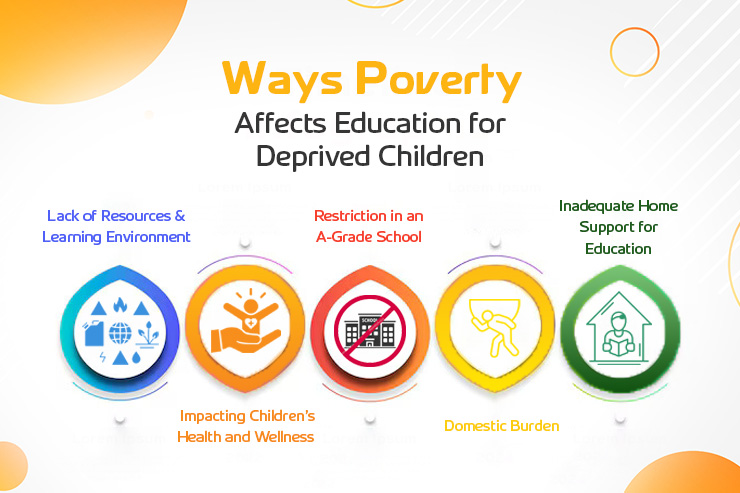
1. Restriction in an A-Grade School
a. Rural vs Urban Divide
Those children who live in villages, distant from urban cities, are usually victims of the urban-rural divide. For them, attending school is a huge task since there is no available school in the vicinity, and where transportation is concerned, the expense is so high that they cannot afford it. These are the simple issues they encountered, which brought them a considerable distance from the education system.
b. Disparity of School Financing
The schools located in poor communities often lack the necessary resources. These schools do not receive proper textbooks, nor do they have study materials, and qualified teachers are also not available to these schools. Due to these reasons, extremely poor results are achieved. If the educational institution receives sufficient funding, the quality of education will be better. However, today, adequate funding is not available in most schools. That is why PARD INDIA, an NGO serving deprived children, is rigorously working on this issue to prevent it at its root.
2. Lack of Resources and Learning Environment
a. Overcrowded Classrooms
In those areas that are worst hit by poverty, the figure of children who attend school is extremely large, and it’s clear that in such numbers, it becomes really impossible to take care of every child. Now imagine: if a child is attempting to receive an education in these conditions, he won’t be able to obtain a high-quality education, even if he tries. It is one of the worst-case scenarios children have to go through. It is one of the primary reasons we work on this matter, ensuring that every child receives an advanced education.
b. Lack of Facilities
There are no facilities in any of the schools below the poverty line. These schools lack laboratories and libraries, and even clean drinking water is not available in these schools. Still, individuals below the poverty line have no choice but to adjust to such a situation. Furthermore, PARD INDIA, an NGO working for education in India, ensures that every child receives the necessary school supplies and clean drinking water so that these facilities never hinder their education.
3. Impacting Children’s Health and Wellness
a. Malnutrition and Health Issues
Children who belong to poor families are primarily victims of malnutrition, which impacts the focus of the children who are learning in the class. Other than this, children belonging to low-income families are primarily victims of chronic illness. Furthermore, they are usually victims of diseases like asthma and anaemia. These diseases can significantly impact a child’s overall performance and often result in the student missing classes.
b. Mental Health Problems
You might disagree, but deprived children experience a tremendous amount of stress and insecurity, and it has a monumental effect on their mental health. Such children are victims of depression and anxiety. Such children experience the most emotional problems, which makes it extremely difficult for them to remain motivated and focused on their studies. Likewise, at PARD INDIA, an NGO serving deprived children, we organise campaigns to spread awareness, preventing the mental health problems that children who are below the poverty line are facing daily.
4. Domestic Burden
a. Child Labour
The responsibility falls on the child who grows up in a poor family because, due to the family’s poor economic status, they have to dedicate themselves to work, such as labour, which reduces the time they are supposed to spend on studies. Even now, child labour is a massive issue in nations like India and Bangladesh, particularly in rural areas.
b. Taking Care of Children
Poor children may be forced to take responsibility for caring for younger siblings or older relatives, which can keep them out of school on a regular basis. Nevertheless, this unequal burden denies them the chance to put their minds on their studies.
5. Inadequate Home Support for Education
a. Education of Parents
Children whose parents have never been educated are not in a position to provide much educational guidance to their children, as they lack such experience. Such parents are not only unable to assist their children with homework but also are not keen on the activities that are going on in their school. Thus, it means the kind of guidance a parent provides to their children regarding studies is not feasible in such a poor household.
Practical Solutions to Surpass These Barriers
We have already discussed the significant reasons for poverty affecting basic education for deprived children. In this section, we will discuss a practical solution that might serve as a primary initiative towards improving society and the lives of individuals, particularly children.
- To break this cycle of property impacting basic education for children, we can support early childhood education campaigns to raise awareness among individuals who want to donate in kind. Moreover, this can be achieved by expanding community and government-based programs that include sponsoring a child’s education, thereby providing access to basic education for people living below the poverty line.
- PARD INDIA, an NGO working for education in India, partnered with local businesses and schools to create an affordable early education centre for children who are living in poverty.
- We can also provide the required incentives for all teachers who have low incomes to encourage them. Therefore, it is the best way to motivate them so that they can focus on providing quality education to children. After all, we should also look after the needs of our teachers.
- We initiate multiple donation programs to raise awareness among individuals who wish to donate in kind to support underprivileged children, including the provision of smart classrooms, basic school supplies, mobile libraries, and school accessories.
It’s Time to Wrap Things Up!
Poverty’s effect on education is a worldwide challenge that disproportionately impacts helpless children and poor families. Likewise, the obstacles they face are both financial and systemic, making it more challenging for them to escape this poverty cycle. Nevertheless, through a commitment to equity, targeted interventions, and increased investment in education, we can help ensure that every child receives a quality education, regardless of their background, and provides the opportunity to grow, learn, and reach their full potential.
At PARD INDIA, the best non profit organisation in India, we are making a significant move to prevent poverty and its impact on all underprivileged children. We are committed to breaking the poverty cycle and providing education to children. Through these essential initiatives, we connect such children with the mainstream of education. We teach children about life skills and promote hobby growth among deprived children through our campaigns and events. Our vision is to build a fruitful community for every kid. We also have volunteering programs where you can get involved in this initiative. We would like to welcome you, and together, we can improve the situation for all underprivileged children.
Volunteer with Us, and Together, Let’s Build a Better Tomorrow!