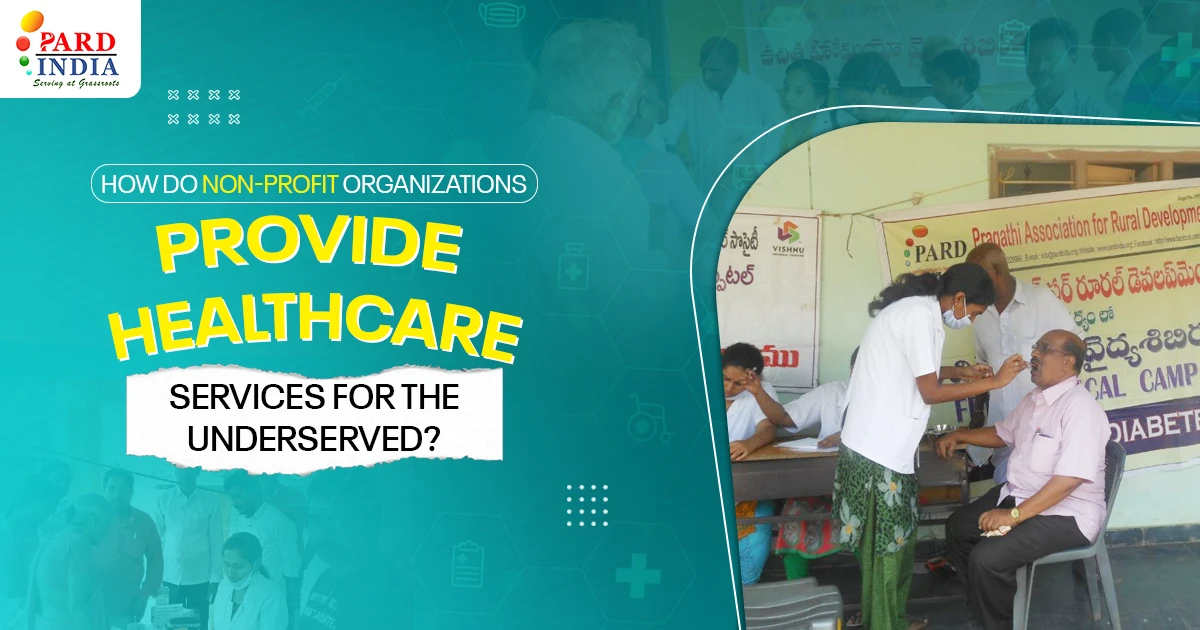
How do Non-profit Organizations Provide Healthcare Services for the Underserved?
In India, the health sector is deteriorating. Underdeprived communities are not getting access to basic health care, which leads to major drawbacks and affects the overall communal sectors of India. Furthermore, accessibility remains imperative, especially in the countryside, where basic medical facilities are limited. Growing healthcare costs, unequal access to basic care, and limited infrastructure in rural communities continue to affect overall health outcomes.
When it comes to quality medical care, it often slips away from the economically disadvantaged, resulting in stark disparities in health outcomes. Moreover, issues such as a shortage of skilled healthcare professionals, inadequate infrastructure, and the burden of communicable and non-communicable diseases further compound the challenges. Nevertheless, this is where non profit organizations in India play an imperative role in bridging the vital gap between care and need.
In this comprehensive blog post, we will discuss how healthcare social work organizations in India support underserved communities, reduce financial barriers, and contribute to a more convenient healthcare system.
Role of NGOs in India’s Deprived Healthcare System
The role of popular NGOs in India is imperative in supporting the country’s health care department, especially in rural areas where formal medical attention struggles to reach. Additionally, -PARD INDIA, one of the leading non profit organizations in India, works at the grassroots level, addressing gaps in awareness, access, and affordability while building long-term trust with deprived communities. Likewise, let’s discuss the fundamental roles NGOs play in the under-resourced healthcare system.
1. Provide Affordable and Free Medicines
An almost painful reality of a deprived healthcare system is that people live in more fear of their bills than their illness. Private medical care is expensive. At the same time, government facilities often lack medications in stock. NGOs function as a bridge in these situations. Furthermore, NGOs conduct free OPD camps, provide underserved populations with essential medicines, and offer low-cost diagnostic tests. The reach of cost-effective care for common ailments is significant, and it’s not limited to low-income people. It’s more like giving life support.
2. Strengthening Maternal and Child Health
Maternal health and nutrition among children also pose a challenge in India, particularly in low-income households. The NGOs’ activities in these domains include antenatal checkups for pregnant women, iron-folic acid supplementation, institutional delivery, and postnatal care. Immunization programs, growth monitoring, ORS and zinc, breastfeeding, and screening for malnutrition are relevant to children, and maternal involvement can improve their conditions. Social work organizations in India take part in these initiatives in practice.
3. Driving Health Awareness and Behavior Change Communication (BCC)
Healthcare is not just about hospitals. It’s also about mindset change. NGOs raise awareness of issues such as hygiene, sanitation, menstrual health, family planning, nutrition, drug abuse, and disease prevention in plain language. There are numerous myths prevalent in rural India. That is why popular NGOs in India take small steps to raise awareness and drive change in people’s lifestyles and behaviors. True change occurs when communities adopt healthier behaviors independently.
4. Offer Emergency Relief and Disaster Healthcare Response
Floods, cyclones, earthquakes, and pandemics are some types of disasters in India. In such moments of calamity, it seems like the healthcare system has failed. Overcrowding in hospitals, medicine shortages, and waterborne diseases are all serious problems. However, NGOs actively support emergency medical camps and the distribution of first-aid kits, safe drinking water kits, and sanitation kits. Time is of the essence in moments of disaster. NGOs can respond immediately to these calamities without bureaucratic burden.
5. Provision of Mental Health Support and Counseling
Mental health is India’s hidden crisis. The deprived sections of society face huge amounts of stress, domestic violence, addiction, unemployment, and trauma, but zero levels of support. Here, non profit organizations in India play a crucial role in organizing counseling, running helplines, organizing community-based support groups, organizing school-based mental health programs, and training community workers in identifying depression, anxiety, suicidal behaviors, and substance abuse, among others.
6. Healthcare Workforce Training and Capacity Building
One major issue with a deprived healthcare system is a staffing shortage. It is evident that the availability of doctors, nurses, lab technicians, and counselors varies. NGOs also conduct training sessions for Anganwadi workers, health activists, and school teachers on topics including basic health for the general population, first aid and basic care for pregnant women and children, mental health, and hygiene practices. Some NGOs also offer paramedical and youth training programs to support job creation in communities. It should also be noted that the ultimate advantage of training people lies in building community self-sufficiency.
7. Policy Advocacy and Creating Accountability
The role of NGOs extends beyond delivering services. They are also required to create pressure at the policy level, including better funding, infrastructure, access to medicines, patient rights, and transparency. Using the Right to Information, conducting public hearings, and collecting community information are among the ways NGOs are exerting pressure on the healthcare system. The voices of such deprived communities are rarely being considered, but through NGOs, their problems are being brought to the mainstream. When NGOs hold the government and private sector accountable for conducting their activities appropriately, the healthcare system changes.
PARD INDIA Ensuring Immediate Attention to Healthcare for Deprived Communities
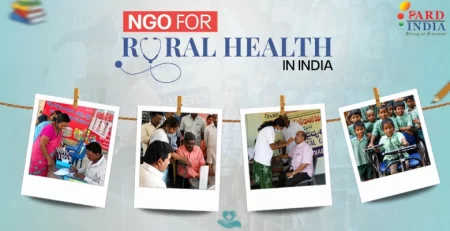
At PARD INDIA, our entire team is working rigorously to provide access to healthcare facilities in underserved and remote areas. We operate health vans and conduct regular health camps and programs for people at the grassroots level. Additionally, we mainly focus on accessibility issues, preventive healthcare solutions, and tailored solutions to each community. PARD INDIA, one of the leading NGOs in India, is contributing to improving the quality of healthcare services.
To develop a robust healthcare system today, the government, private, and non-profit sectors must work together, given the heterogeneous needs of the population. While we navigate the healthcare landscape in India, one thing becomes clear: the role of non-profits is both auxiliary to and central to crafting a bright and healthy future.
It’s Time to Wrap Things Up!
The role of NGOs is to deliver high-quality healthcare facilities that integrate essential and transformative services. However, we hope this end-to-end guide has provided you with the precise details on the critical role of NGOs in improving healthcare in rural communities. Likewise, if you want to be part of this initiative, PARD INDIA is the best choice. Let’s work together to build a better place where everyone has equal access to medical care, regardless of their background. So, what are you waiting for? Shake your hands with us today and make a better tomorrow!
Volunteer, Donate, or Spread A Word!