Understanding Top NGO in India For Education By Reading Them Through Their Challenges
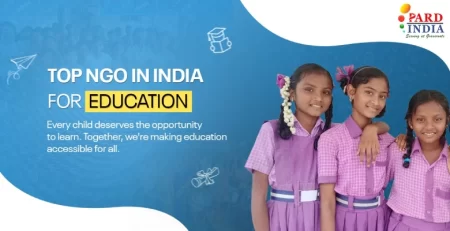
The education system is considered the backbone of any nation, but there are millions of Indian children who cannot access a good education. There comes the top NGO in India for education, who adresses many factors that prevent them from attending quality schooling, such as poverty, gender discrimination, lack of infrastructure and teachers, among others, despite the efforts of the government. The educational non-governmental organizations are on a mission to bridge this gap by involving communities and schools in addition to policymakers. To guarantee the right to education for all children, regardless of the background they come from.
These organizations not only provide formal education but also emphasize life skills and digital literacy along with overall development. These top NGO in India for education have been making an impact in the education sector of India by combining grassroots solutions with innovation. Thus, it is because they understand the importance of education, as it enhances one’s ability to think critically and solve problems. More importantly, it encourages creative thinking, self-respect, and self-awareness. It also empowers a person with knowledge and skills in order for children to have a meaningful life and better social standing.
This blog highlights the importance of educational NGOs in the first place, the ten most influential ones that have made an impact, and the challenges that these NGOs face in the process.
Major Issues NGOs Are Solving in Societies Through Their Work
The Top NGO in India for Education are solving some of the major overlooked issues in our society. It is as simple as gender equality to early education, but discrimination in it is so deeply rooted. It has taken this generation to identify and then work on them to bridge the gap. While th government took the step, the major difference comes from the education working for education. Here are the five major issues it has tackled so far.
1. Access to Education For All
Many poor children do not have access to education due to poverty or even distance. This is why NGO like PARD INDIA construct schools, scholarships, and literacy projects. For example, NGOs help the children of such marginalized areas go to school.
2. Quality of Education Without Any Gap
Quality of education impacts the career choices of people, but poor education systems, teaching techniques, and a lack of learning resources affect their performance. Hence, NGOs pay attention to training teachers, upgrading curriculum, and classroom learning materials. Just like that, NGOs also advocate new techniques and educational technology.
3. Gener Inequality in Marginalized Communities
Poverty, early marriage, and cultural biases stop many young girls from going to school, and the top NGO in India for Education helps here. NGOs work towards gender equality through scholarships, mentorship, and outreach programs for girls. Most importantly, these programs pave the way for better futures.
4. Early Childhood Education as It’s Their Fundamental Right
Preschool education is crucial to a child’s growth. However, most children living in rural areas do not have access to preschool education. NGOs construct preschool institutions and provide learning materials for children to fill this gap.
5. Vocational Training To Ensure Stability
Formal education does not always prepare students for employment. This means that students struggle with certain skills that could have made them gain employable skills. NGOs organize vocational training to equip the youth with these employable skills.
Why India Needs the Educational NGOs Most?
However, access to quality education is uneven in India, where it boasts the highest population of school-going students in the world. The most disadvantaged are normally the rural populace, marginalized groups, and those from poor households, and PARD INDIA helps exactly there. Many of them withdraw from school before secondary education due to financial problems, working, and inadequate facilities.
It is at this juncture that non-government organizations come in as the supplementary arm of the state. It provides personalized services, tutoring, and novel ways of learning so as to make the children not only go to school but also learn. In addition, they tackle the social issues such as gender bias and resistance to make sure that education is inclusive. From the grassroots level, NGO’s bring flexibility, innovation, and empathy into the education system, making them an indispensable partner in the process of building an enlightened India.
Some of the Challenges Faced by Educational NGOs
The top NGO in India for Education is nurturing young souls that has lot to accomplish through the hidden potential they own. Although it all starts with education from an early age, to being the leaders with an open mind and a creative soul. Doing such meaningful work requires lots of effort, and this increases the support they want from us. Various educational NGOs face challenges that restrain their effectiveness. These are some of the problems:
- Financial limitations: This issue affects sustainability in the long run because of the lack of sufficient financial resources.
- Scalability Issues: It could be difficult to replicate any success story across different areas.
- Inadequate Infrastructure: In most cases, the rural schools lack appropriate classroom facilities, sanitation services, and technological gadgets.
- High Dropouts: Due to economic issues, most children, and in this particular case, the girl child, drop out of school.
- Policy barriers: Some governments may have complicated policies or processes that will hinder the work of NGOs.
- Cultural Beliefs: Some strong cultural beliefs discourage the process of learning among the girl child.
Wrapping It Up!
Education is the only key through which one can end the vicious circle of poverty and inequality in India. The top NGO in India for education have become effective instruments of bringing about such change. They are focusing on providing education that is accessible and equitable for every child, regardless of their background.
You can invest in the future of India by donating and participating in volunteering activities in these NGOs or by creating awareness regarding this matter. Together, we can build a nation where every child can learn and succeed, and this is the mission PARD INDIA is on.
FAQs
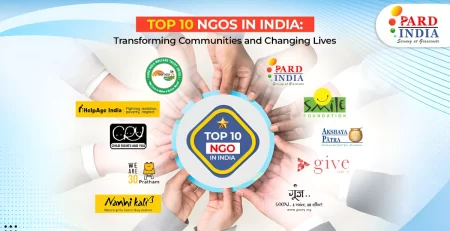
These are some of the top NGOs for education:
- PARD INDIA
- Pratham Education Foundation
- Smile Foundation
- Teach For India
- Akshaya Patra Foundation
- Save the Children India
- Educate Girls
- Goonj
- Bharti Foundation
- Make A Difference (MAD)
- Room to Read India
Yes, with PARD INDIA, you can apply for volunteer opportunities, as we are actively looking for volunteers to help with work. They are assisting in fundraising, and some of them act as mentors in order to volunteer. We encourage people to participate and help us to reach and complete our mission and objective to teach more and more children.
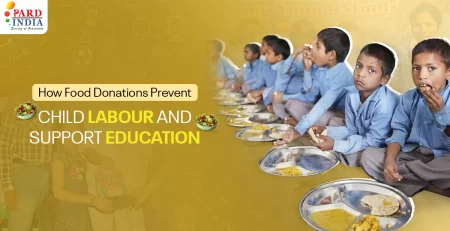
In order to guarantee that the dropout rate is minimized as much as possible, the NGOs enrol the out-of-school children. By offering them remedial classes, purchasing school supplies, conducting awareness campaigns, providing scholarships, and providing meals for families.
Certainly, there are some NGOs that collaborate with the government agencies to facilitate such initiatives as the Right to Education (RTE) Act. Furthermore, the Samagra Shiksha Abhiyan and the Mid-Day Meal Scheme, such cooperation enhances the effect of these initiatives.
Yes, the deductions are taxable in case of contribution to registered NGOs under the Income Tax Act of Section 80G. It is the expectation on the part of the donor to always confirm that the NGO is certified before making any donations.