Why is Climate Resilience the New Frontline of Rural Social Work in India?
Climate change is no longer an abstract discussion within the corporate world about melting glaciers and carbon emissions. In rural India, it is an extremely tangible daily experience that the best NGO in India are trying to clear up. It is the drying up of the village pond, the unexpected floods which damage the school playgrounds, the failure of the monsoon. That results in the debt incurred by a farmer’s family, as the whole work seems to stop, which affects employment.
Historically, traditional philanthropy has been concerned mainly with providing immediate aid in terms of food, clothing, and other necessities. Though such endeavors continue to be essential, the dynamics of social work have changed dramatically. The best NGO in India today is one that works towards addressing the core issues rather than merely dealing with their symptoms. Therefore, while looking closely at these core issues, it turns out to be environmental.
Without the climate resilience of rural areas, true empowerment becomes impossible. This is why environmental sustainability has become the frontline of social work today.
How Climate Disrupts Rural Life? Understanding Impact and Social Consequences
When we think of climate change, we rarely think about its direct impact on a child’s education or a community’s health. In rural villages, the need for the best NGO in India is deeply crucial, as the environment is deeply intertwined with every aspect of human development. The table below illustrates the devastating domino effect environmental instability has on rural communities:
| Area of Life | The Climate Impact | The Social Consequence |
|---|---|---|
| Education | Severe droughts dry up local lakes and groundwater sources. | Children (especially young girls) are forced to drop out of school to walk miles every day just to fetch water for their families. |
| Livelihoods | Unpredictable monsoons and rising temperatures destroy seasonal crops. | Marginalized farmers face severe debt, pushing families deeper into systemic poverty and driving forced migration to urban slums. |
| Health | Increased frequency of heavy rural flooding and stagnant water. | Rapid, uncontrollable outbreaks of waterborne and vector-borne diseases, like cholera and dengue, ravage vulnerable populations lacking proper healthcare. |
How PARD INDIA is Building Climate-Resilient Communities
Breaking this vicious cycle calls for a comprehensive approach that ensures the long-term solution is permanently secured. Building schools alone is not enough since the surrounding environment needs to support the community as well.
Here is how PARD INDIA incorporates emergency environmental measures into its rural development strategy:
1. Greening the Grassroots Through Mass Plantation
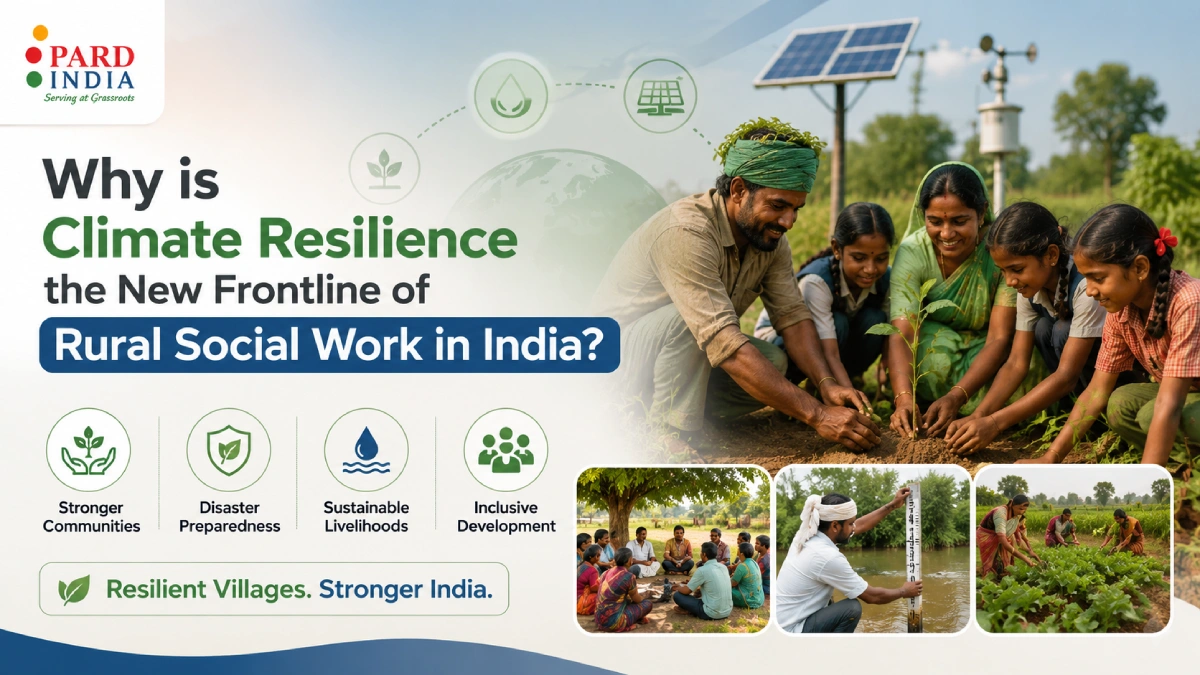
Climate change cannot be addressed without rebuilding the local ecosystem. The organization undertakes massive tree plantation campaigns in the villages under its operation. Apart from adding aesthetic value, these projects play a major role in preventing topsoil erosion, increasing the underground water level, and creating better microclimates that will safeguard the agricultural produce.
2. Water, Sanitation, And Hygiene (WASH) Defence
With climate change, water becomes a cause for diseases among other problems. Implementing WASH programs makes sure that the marginalized communities gain access to safe drinking water and environmentally friendly sanitation facilities, protecting them from climate-related diseases.
3. Empowering the Next Generation of Eco-Warriors
The process of building a sustainable environment starts with education. In addition to other initiatives such as V-Kids and V-Students, the organization teaches children about hygienic practices and environmental issues, creating eco-warriors among marginalized youth.
4. Waste Management and Plastic-Free Villages
The problem of improper disposal of waste, when coupled with sudden floods during the monsoons, can lead to serious soil degradation and pollution. PARD INDIA is campaigning for plastic-free villages and sustainable waste management practices.
Final Thoughts!
Taking care of the environment and helping marginalized communities are not two different goals anymore. The efforts of the best NGO in India have proven that it’s all the same thing. If we are serious about wiping out poverty in rural areas, we have to create communities that will be able to survive. Through the challenges of climate change, because only afterwards can they focus on other aspects. Education, health care, and sustainability are the ingredients that raise the level of an organization’s work.
This is how PARD INDIA becomes such a powerful grassroots organization with years of proven track record. But grassroots organizations cannot do it by themselves. This challenge needs the collective efforts of city dwellers, companies’ CSR managers, and ordinary people. Any of your efforts, whether you volunteer your time or money or collaborate on some projects. It will contribute to the creation of sustainable rural communities.
Frequently Asked Questions
Climate resilience implies the provision of tools for adaptation to changes in the environment to maintain several factors. That includes the health, education, and livelihoods of rural populations despite climatic disasters through means such as drought-resistant agriculture and rainwater harvesting techniques.
The children, especially females, are forced to forego their studies due to extreme weather conditions and water shortages. In order to collect water and assist family members in making economic recovery.
Through V-Kids and V-Students programs, PARD INDIA provides educational supplies, computer literacy, and tutoring to rural children. To ensure that they get equal access to quality education and better future prospects.
PARD INDIA conducts mass tree planting campaigns, safe drinking water projects, and rural hygiene programs to make greener and highly sustainable villages. With a healthy environment in our operation zones.
Yes, we partner with corporates for conducting tailor-made CSR programs targeting rural education, healthcare, and environmental sustainability. With highly transparent impact reporting and highly meaningful employee volunteering opportunities at the grassroots.