Feeding Futures: PARD INDIA’s Zero Hunger Movement in Rural India
India is a country where agriculture is the primary means of survival for almost 60% of the total population, and the nature of hunger is even more pronounced in India, particularly in rural areas. However, there are plenty of NGOs working rigorously to prevent hunger and promote zero hunger support in India. Moreover, even in India, which has come a long way towards economic growth, there are millions of hungry and underweight children. Furthermore, hunger is not just about the absence of food. It’s a lack of opportunity, health, and dignity.
The PARD INDIA, a leading NGO promoting zero hunger support in India, based in Andhra Pradesh, is leading the initiative to secure a grant. It has adopted strategic interventions that will be implemented within a sustainability framework, including local community involvement, a research-backed approach, and a clear presentation of effects. Likewise, in line with the UN Agenda for Sustainable Development, specifically Goal 2, “Zero Hunger,” PARD INDIA has created a complete program that combines all aspects to ensure no one is deprived of their right to food security. This way, we can all come together to support this critical initiative to prevent hunger crises in rural or deprived communities in India.
The READ project of PARD INDIA is an initiative aimed at raising awareness and promoting access to information. It provides information on the improved model for organic food production and community development initiatives, thereby creating sustainable solutions for food security. Although this blog offers insights into our overall efforts, it is clear that the organization’s straightforward actions are crucial in facilitating the fight against hunger and contributing to a more successful and healthier India.
The Importance of Zero Hunger for India
Food insecurity in India is a complex issue resulting from, among other factors, the twin problems of poverty and inequality, high agricultural dependence, and a lack of awareness about nutrition. Anyway, we should see what Zero Hunger has to do with India.
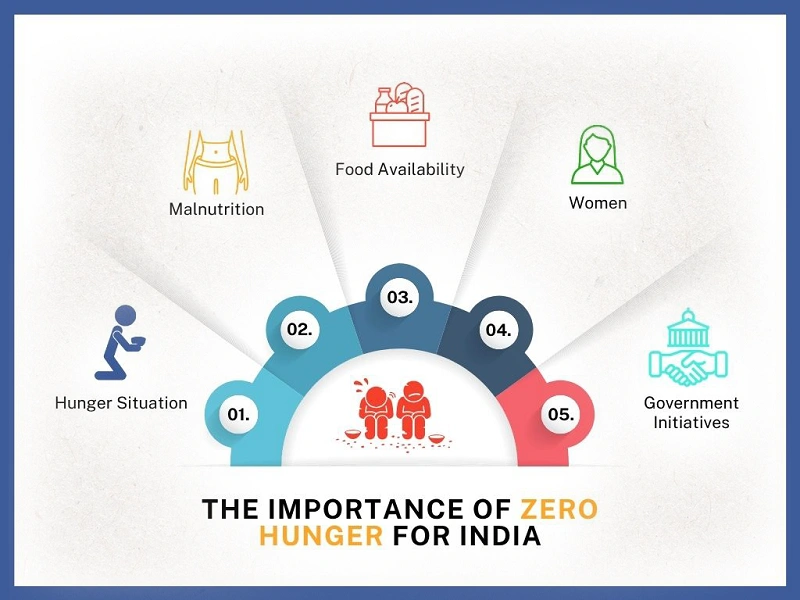
1. The Hunger Situation in India
India’s food problem is not a lack of food but rather a problem with the quality of distribution, knowledge, and availability of food sources. The FAO (Food and Agriculture Organization) reports that the biggest problem is that approximately 16.3% of the Indian population is not receiving enough food.
2. Malnutrition and Rural India
Rural areas see more stunted and underweight children because of poor maternal health, poor dietary diversity, and poor sanitation, issues that PARD INDIA, an NGO for rural health, tackles explicitly.
3. Nutritional Security vs. Food Availability
Giving rice or wheat exclusively is not enough. A diet balanced with pulses, vegetables, and proteins continues to be lacking in rural diets and needs concentrated nutritional interventions.
4. Impact on Children and Women
Undernourished children have cognitive and physical disabilities. At the same time, pregnant and nursing mothers with inadequate access to good nutritional and balanced food are at greater health risk.
5. Government Initiatives and Policy Framework
Programs such as ICDS and Mid-Day Meals are imperative. Still, they often lack participation from the grassroots community, resulting in delivery inefficiencies that emphasize the importance of local NGO partnerships.
The READ project of PARD INDIA is an initiative aimed at raising awareness and promoting access to information. It provides information on the improved
PARD INDIA’s Role in Zero Hunger
Food security is a key part of PARD INDIA’s mission, serving as an integral pillar of social change. Furthermore, here are some key highlights that underscore our significant role in the Zero Hunger movement.
1. Community Nutrition Drives
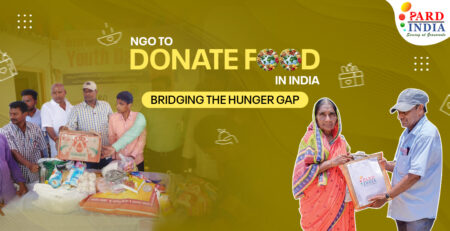
To give back to those in need, we regularly organize food distribution camps. Therefore, we aim to provide meals packed with imperative nutrients for underprivileged tribal communities.
Through our Rural Empowerment and Development (READ) Project, we combine health, education, and food security as a single grassroots solution. Nutrition provides instant relief from hunger while also imparting knowledge to families regarding dietary habits.
2. Sustainable Agriculture and Livelihoods
The NGO encourages sustainable farming and livelihood education for marginal and small farmers to improve food availability and family income, which provides a direct reduction in hunger.
PARD INDIA, the best charities to donate to India, works with farmer groups, enabling them to diversify their produce, adopt organic production methods, and minimize their reliance on climate-risky strategies.
3. Child Nutrition Programs
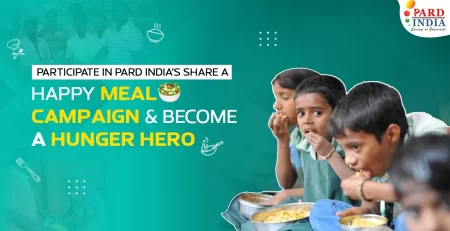
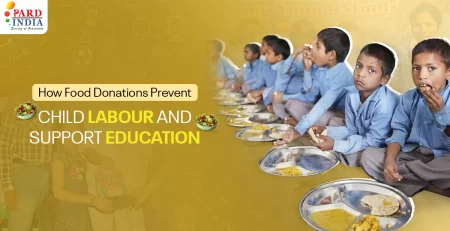
We organize nutritional education programs for children and their parents to ensure that healthy food habits are established and maintained from an early age. Additionally, we provide rations and healthy supplements during health drives outside the school setting.
4. Gender-Sensitive Food Security Programs
PARD India empowers rural women by establishing Self-Help Groups (SHGs) for them, initiating the formation of community kitchens and nutrition gardens that address inter-household food disparities. Additionally, local people are taught to produce leafy greens, pulses, and vegetables in their respective areas, thereby reducing expenses and eliminating the need for unstable markets from which they source these goods.
Strategic Partnerships & SDG Alignment
Here are some of the significant strategic partnerships we have established to support government infrastructure and enhance impact through strategic alliances.
1. Alignment with SDG 2: Zero Hunger
Through action on nutrition education, sustainable agriculture, and emergency food relief, we work directly to align with SDG 2’s key indicators.
Our READ Project also weaves together several Sustainable Development Goals (SDGs), including poverty eradication, good health, and gender equality.
2. Local Governance Alliance
As one of the most popular NGOs in India, we collaborate with Panchayats, district administrators, and school principals to introduce hunger mitigation schemes that reflect the local people’s requirements.
Public-NGO alliances have substantially strengthened program implementation and monitoring in tribal states.
3. CSR and Corporate Partnerships
Through CSR partnerships, we have achieved nutrition kits, solar-powered storage devices, and transport assistance, particularly in inaccessible villages.
The corporate interaction has enabled us to reach more people sustainably while maintaining transparency.
4. Monitoring and Evaluation Metrics
A monitoring system supports each project. Our data-driven strategy encompasses indicators of BMI levels, dietary diversity, and anemia.
These statistics are used to reimagine interventions, making program architecture responsive.
5. Knowledge Sharing and Advocacy
PARD INDIA actively engages in knowledge forums, writes papers, and attends workshops to advocate for policy transformation and hunger solutions based on people’s needs.
Strengthening the Food Security Net
While considerable progress has been made, ending hunger in India requires ongoing multi-sectoral efforts.
1. Investing in Local Food Systems
PARD INDIA already promotes such models in tribal belts by strengthening local food chains with cooperatives, storage facilities, and market linkages, which are essential to food availability.
2. Nutrition in All Policies
We promote a nutrition-first perspective in education, health, and agriculture policy-making, which plays a crucial role in preventing zero hunger.
3. Youth Involvement and Awareness
Youths have to become nutrition ambassadors. PARD INDIA continuously organizes youth workshops to advocate community health, kitchen gardening, and food equity awareness.
4. Technological Interventions
Applications of GIS mapping, mobile nutrition trackers, and food grain monitoring systems are being routinely used by the NGO to enhance transparency and reach.
5. Mobilizing Civic Participation
Institutions alone cannot stop hunger. PARD INDIA invites corporations, colleges, and civic groups to make a difference by adopting nutrition villages or volunteering.
Let’s End Hunger, Together!
We consider hunger to be not an individual problem, but a collective system failure. Moreover, it becomes clear that addressing it requires a comprehensive approach. At PARD INDIA, NGO for rural health, we are building a platform that blends grassroots activism with a model that proves to provide change where it matters most.
Furthermore, we are committed to breaking this cycle of hunger by empowering rural communities through nutritional awareness campaigns and inclusive development. However, we cannot do it alone; we need your crucial initiatives in changing this situation to build a better India. Whether you are an individual, a compassionate changemaker, or a corporate partner, your support can help us nourish more underprivileged children, uplift entire communities, and reach more families.