Why Do Popular NGOs in India Connect Better with the Rural Population?
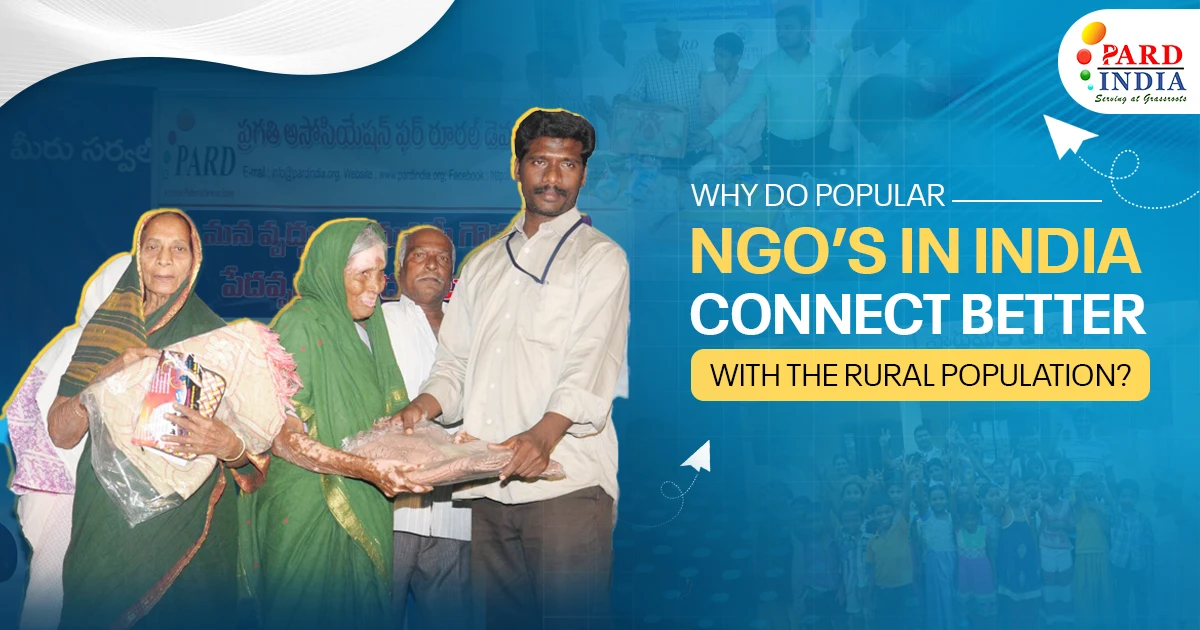
Rural areas are the core of India, as more than 70% of the population lives there. Nevertheless, most villages lack basic necessities, including education, healthcare, food, clean water, career opportunities, and care for older adults. It is very harsh living in such places where rural communities are not getting enough food to feed themselves, not proper medical facilities for better treatments, not quality education, and so on. Moreover, this is where popular NGOs in India, such as PARD INDIA, come into the picture. We ensure to provide better assistance, support, and vital services to fulfill the basic needs and requirements of the deprived community.
Additionally, we engage with locals to understand their genuine needs and address them, making their lives a little easier and better. Therefore, with an impactful mission driven by deep social responsibility and a dedication to positive change, the top 10 NGOs in India play an essential role in moulding a better world for deprived communities. Furthermore, in this comprehensive blog, we will discuss fundamental ways in which popular NGOs can better connect with rural areas in India. Let’s get started!
Significant Ways NGOs are Transforming Lives in Rural India
The best NGO websites in India play an essential role in addressing pressing issues affecting rural India. Whether it’s about providing health care, fundamental education, women’s empowerment, or basic necessities, NGO’s work is meaningful and vast. Let’s explore in detail one by one:
1. Taking Quality Education to the Doorstep
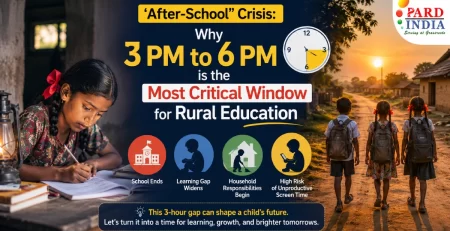
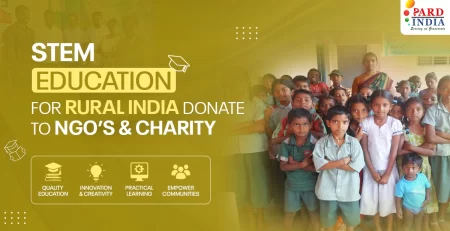
The major problem in rural areas of India is limited access to schools, as schools are closed or teachers are in short supply. Resources are also low, which is why NGOs are emerging as game-changers. NGO, such as PARD INDIA, are enhancing the quality of schools in rural areas by supplying smart classrooms, library kits, digital tablets, and activity-based learning. We are focusing mainly on education, scholarships, free uniforms, free books, and sanitary facilities.
2. Women Empowerment and the Revolution of Self-Help Groups
Currently, women in rural areas do not participate in financial matters in India. The top 10 NGOs in India train women in savings plans, microfinance, and accounting. NGOs also provide a broad platform for women to learn skills such as tailoring, dairy, papad making, candle making, and handicrafts. Nevertheless, the most important thing is providing women with bank access, digital payments, and government initiatives. The moment women start earning, their lives change for the better. These NGOs are quietly changing the lives of people in the countryside.
3. Improving Healthcare Camps and Primary Health Access
In villages, hospitals are far from habitations, and doctors are rarely available. Thus, this is one reason awareness is very low. Popular NGOs in India, such as PARD INDIA, arrange free health examinations, vaccination programs, and support for expectant mothers. We ensure that mothers are made aware of the importance of taking care of themselves before and after childbirth. They are also made aware of common health conditions such as TB, malaria, anemia, and diabetes. Some NGOs have also begun providing telemedicine services, enabling patients to consult specialists in the village. Health care is about curing, preventing, and creating awareness.
4. Bringing Dignity Back Through Clean Water and Sanitation Projects
In rural India, access to clean drinking water and toilet facilities is considered a luxury. The best NGO websites in India are implementing initiatives such as hand pump repair, water purification systems, rainwater harvesting, and water storage systems. Toilet construction and proper use, menstrual hygiene, handwashing, and waste management have tremendous potential. However, if the main access to water is secured, diseases are controlled, costs are reduced, and children can attend school. One major, often overlooked, benefit of sanitation is that it safeguards women’s safety and dignity.
5. Providing Farmers with Modern Techniques and Better Income Options
Agriculture is the mainstay of India’s rural economy. However, this sector has lacked adequate training and marketing opportunities. Popular NGOs in India train farmers in techniques such as soil testing, organic farming, drip irrigation, crop diversification, and pest management. Some also adopt climate-resilient agricultural practices. These are lifesavers during natural disasters such as floods and drought. Farmer-Producer Groups are created to familiarize them with a new kind of selling. Thus, it helps minimize middleman costs. If farmers are remunerated fairly, it leads to greater stability in the village economy.
6. Skill Development and Preparing Rural Youth for Jobs
The youth in these villages have God-given talents but lack direction and adequate opportunities to use them. NGOs open skill development centers and provide training in computer knowledge, spoken English, electrician courses, plumbing courses, welding courses, garment making, beauty therapy, and hospitality services. Some NGOs even arrange to place these individuals and provide interview grooming for the interview sessions that they must attend to enable safe migration and avoid any sort of exploitation for these youth. Furthermore, when youth become independent, the whole family is elevated to a better status in life. Skill development for these youth can break the chain of poverty in a literal sense.
7. Child Protection and Strong Action Against Child Labor
Child labor and child marriages are the bitter truths that still exist in rural areas. Popular NGOs in India promote awareness among rural communities. They also work to re-enroll children in schools, provide legal aid, and form monitoring groups. Educating parents about the long-term investment is a movement initiated by NGOs. Counseling and training are also provided through the NGO network to support the children’s reunification. The rural population must genuinely take up the cause for change to occur. NGOs are not only providing services. They’re also creating a mindset shift. A mindset shift that’s supposed to protect the future.
It’s Time to Conclude Here!
NGOs in India are not limited to service providers. They are a community that offers hope to every deprived individual who has given up on their lives. Whether it’s teaching one child, saving one tree, or feeding one person, NGOs are working tirelessly to drive fundamental change in rural areas. Whether it’s donating, volunteering, or spreading awareness to some of the top NGOs, you can create a strong wave of impact.
However, if you are looking for popular NGOs in India, look no further than PARD INDIA. With a comprehensive team of skilled, experienced professionals, we are working to transform rural areas into what they truly deserve. If you want to join us, we are here to welcome you with open arms. Let’s connect together to create a better, brighter future for everyone.