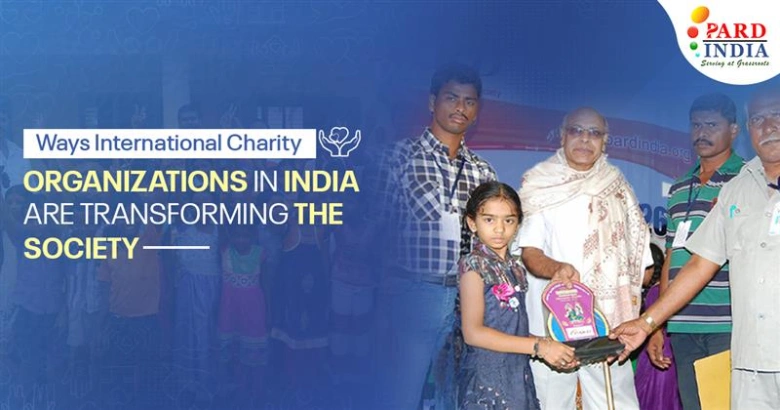
Ways International Charity Organizations in India are Transforming the Society
According to the United Nations Educational, Scientific, and Cultural Organization (UNESCO), almost 6% age of school-age kids in India are living in deprived and rural communities. With a school-age population of 431 million in 2023, it impacts more than 25 million kids. Furthermore, international charity organizations in India are imperative in bridging this understanding divide and play life-changing roles in breaking the poverty cycle in India.
Recognized by many as one of the leading NGO working for education in India, PARD INDIA is dedicated to filling this fundamental educational gap, ensuring that children across India have an innovative, fruitful, consistent, and quality education. Nevertheless, in this comprehensive blog, we will discuss the crucial ways international NGOs in India are transforming a better tomorrow for every deprived child, regardless of their background.
Ways NGOs are Using to Transform the Rural Society of India
In this section, we will discuss the fundamental ways in which international NGOs in India transform rural society.
1. Enhance Access to Education
Non profit organizations in India are weaving ladders, especially in rural and deprived communities. They turn classrooms into schools, training teachers, funding scholarships, and bringing in tech-enabled learning. Additionally, they bring STEM labs to villages, put books in the hands of people who earlier held water pots, and install early-childhood learning centers in neighborhoods that formal systems had neglected. Furthermore, with every student who stays in school instead of leaving to work, the future gains a sharper, brighter edge.
2. Strengthening Livelihood Opportunities
International charity organizations in India have introduced skill development initiatives for unemployed women and youth. Vocational education includes tailoring, carpentry, technology services, and agribusiness. Microfinance support enables people to establish sustainable businesses. However, partnerships with local business sectors develop structured employment pathways. Rural entrepreneurship workshops provide incubation and a catalytic approach to create innovative solutions based on agricultural and craft products. Likewise, this education ecosystem increases economic resilience and reduces the cycle of poverty.
3. Give Rise to Women and Gender Inclusion
The initiatives focus on women’s rights, legal awareness, and participation in work. Popular NGOs in India provide financial resources and a business training program for self-help groups. They have various community programs addressing domestic violence and health-related conditions. They facilitate mentorship and leadership opportunities at the village or town level. Digital literacy programs have enhanced access to online services and employment platforms. The combination of these factors enhances women’s role in their communities and increases their economic independence.
4. Enhancing Water and Sanitation Infrastructure
International charity organizations in India build wells, pipelines, and community filtration systems. Therefore, hygiene promotion campaigns lower the frequency of waterborne illness. Schools receive sanitation blocks and menstrual hygiene content. Greywater recycling initiatives enhance water conservation efficiency in a deprived community. Additionally, monitoring teams evaluate water quality using reliable testing methodologies. It produces healthier communities and the use of sustainable natural resources.
5. Promoting Disaster Relief and Climate Resilience
NGOs distribute emergency resources during floods, droughts, and cyclones. Furthermore, temporary shelters and medical clinics promote community safety, while disaster readiness training engages volunteers and local authorities. Likewise, climate programs organized by the best international charity organizations in India support resilient farming practices and increased irrigation efficiency. Renewable energy projects generate resources for vulnerable households and community facilities. Communities recover quickly and develop stronger survival capacities.
6. Improving Governance and Social Accountability
International charities support policy research and data-informed development frameworks. Digital platforms enable better tracking of welfare benefits and public service provision. Training projects strengthen local governance and decision-making capacity. The best charities to donate to India organize anti-corruption awareness-raising campaigns for the general public and improve accountability and transparency in resource allocation. Likewise, systems for lodging public grievances facilitate equitable dispute resolution. By combining these strategies, ethical governance and citizen engagement improve across regions.
7. Increasing Rural Technology and Digital Access
NGOs provide digital learning hubs to rural communities. They provide reliable internet access in areas with limited electricity supply via solar-powered internet stations. Training projects offer training in computer literacy, online banking, and e-commerce. International Charity Organizations in India, such as PARD INDIA, organize agricultural platforms that provide information on weather alerts, soil testing, and crop pricing updates. Hence, these initiatives are a combination that reduces the inequality created by the digital divide and enhances productivity across rural regions.
8. Strengthening Nutrition and Food Security
International charity organizations in India distribute food to vulnerable families and children. Community kitchens ensure consistent access to balanced meals. Also, agricultural training supports sustainable crop planning and chemical-free cultivation. Likewise, nutrition workshops guide mothers on healthy feeding practices. Storage facilities reduce post-harvest loss and improve food distribution. Nonetheless, these initiatives lower malnutrition rates and support long-term food stability across diverse regions.
A Simple Guide to First-Time Donors Who Want to Help NGOs
If you are a first-time donor and want to take advantage of a donation under 80G in India, this guide is for you. Furthermore, donations from donors have helped us serve over a million meals, provide quality education, and deliver healthcare to thousands of deprived children. Let’s look at the crucial steps to donate to a reliable NGO.
1. Specify the Actual Cause You Care About
Before donating to foreign NGOs working in India, take a moment to recall the social problems that matter most to you. Furthermore, some common causes include:
- Women’s empowerment
- Disaster Response
- Rural development
- Child Education
- Animal Welfare
- Medical Relief
- Nutrition and Hunger
2. Pick the Registered and Trustworthy International Charity Organizations in India
It is imperative to donate to international charity organizations in India that are accurately registered and compliant with government rules and regulations. Here are some pointers that you must consider when picking the NGOs for donation:
- FCRA approval (For Foreign Donors)
- 12A and 80G registration (Income Tax Exemption Act in India)
- A robust transparent reporting and previous track record
3. Ensure to Research the NGO’s Reputation and Impact
Before choosing popular NGOs in India to donate to, take some time to research them thoroughly:
- Visit their official Website
- Go through their annual reports and assessments
- Do not forget to check third-party reviews or NGO listing websites, such as PARD INDIA, GiveIndia, etc.
- Consider how donations are allocated
- Ensure to consider NGOs that are transparent and publish real-time updates.
4. Significantly Understand the Donation Process
Once you have found the most trustworthy and best charities to donate to India, the next step in donating to an NGO is understanding the donation procedure. Furthermore, most NGOs offer numerous ways to contribute:
- Online Donations via secure payment gateways, such as net banking, UPI, or credit/debit card.
- Cheque or cash donations
- Recurring contributions on a monthly or yearly basis
- CSR donations
5. Keep Donation Receipts
For tax-saving purposes, ensure you request a donation receipt after donating to popular NGOs in India, such as PARD INDIA. Registered NGOs in India will provide receipts mentioning:
- Donor Name
- Amount Donated
- Date of Donation
- PAN number of the NGO
- 80G certificate authority
6. Spread A Word
Your vital support does not stop after donating to the trusted foreign NGOs working in India. Furthermore, one of the most potent ways to boost your impact is by spreading the word about the NGO you have picked:
- Share your story on Social Media
- Motivate your Friends and Family to Donate
- You can also host small fundraisers online
Wrapping It Up!
Donating to international charity organizations in India is one of the most effective ways you can help in the fight against hunger, illiteracy, and more. Furthermore, if you are looking for a reliable, well-known NGO working to educate deprived children, look no further than PARD INDIA. Whether you want to donate monetary funds or offer ration kits, we accept everything with open arms. Furthermore, we provide donation receipts to help you claim tax benefits for your monetary donations. So, what are you waiting for? It’s time to consider the best global charities in India to donate to. Your every contribution is valuable to us!
Donate, Spread A Word, or Volunteer with us.