How Can Individuals and Organizations Support NGO Without Monetary Donations?
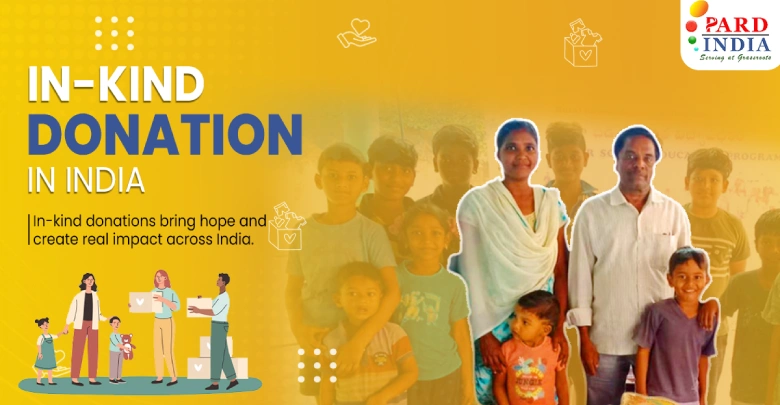
Most donations to NGOs and support groups are monetary, as these are the best-known ways to help. However, in-kind donations in India are slightly and significantly shifting the ways of donating, and the effects are evident. As much as monetary donations are easy, simple, and convenient to make, for many of us, that just didn’t seem very helpful. Especially if large organizations or companies want to support or donate, monetary donations don’t seem very influential. Therefore, the in-kind donation came into the picture, which helps everyone, whether individuals, companies, or organizations, to make the donation the way we want.
It encourages every donor to make in-kind donations in India tosupport people through various forms of giving. From sponsoring to donating items, groceries, stationery, to items for playing, all come under it. Anyone can choose an NGO that accepts the donations, which almost everyone does now. Moreover, this guide will explore what an in-kind donation is, what qualifies as one, how it works, and whether it benefits donors.
What are In-Kind Donations & Items For It?
In-kind donations are non-monetary contributions made by individuals, companies, and organizations to support charity causes. These donations are made in various forms, such as food, clothing, toys, stationery, medical supplies, and other goods that are not in use. By providing these things, you help a community group of children or a local group overcome what they are lacking. These donations are vital and valuable to a charitable organization, as they help people in greater need.
These don’t qualify as a donation under 80G in India because the 80G counts only the donations made in monetary form. But if you are a non-profit organization, a company, or a large institution, you can report these in-kind donations as CSR. It’s an SCR under Rule 4 (1) if it is routed properly. However, it is essential for donors to ensure that the NGO is CSR-compliant, submits a detailed utilization certificate, and obtains a fair market valuation of the donated items.
Some of the examples of items that can be found under the in-kind donations in India contributions category are leftover food, regular meals, used clothing, used computer systems, used bicycles and bikes, books, schoolbooks, toys, sanitary products, recyclable items, blood, hair, mother’s milk, human organs, furniture, household items, appliances, and footwear.
Overall, we can see that in-kind donations cover everything from everyday needs like food, clothes, and sanitary products to big and durable items such as computers, bicycles, and furniture.
The Objectives of In-Kind Donation
The objectives of the in-kind donation are not to obtain the Section 80Gcertificate NGO but to generate awareness. To support families, children, and people in need by donating reusable goods, supporting communities, and adopting an eco-friendly approach. Let’s look at a few of the objectives that this in-kind initiative aims to follow.
- It helps raise awareness of in-kind donations that support the reuse of old goods and promote eco-friendliness. At the same time, making significant use of these old goods can meet the needs of people who cannot afford new items.
- For motivating people, community organizations, housing societies, etc., although it doesn’t qualify as a donation under 80G in India. To contribute their old and used things rather than disposing of them or selling to scrap collectors.
- For reaching out to NGOs and other organizations in order to know about the requirements for goods, and then publishing such information on our website, so that people can come to know about the same.
- For sharing information about the in-kind donations campaign through social networking sites and blogs organized in different parts of India.
How does it work for Organizations and Donors?
In-kind gifts serve as a smooth connection between the donor and the organization receiving aid without qualifying for donation under 80G in India. This approach allows the nonprofit to organize its list of needs and manage its resources effectively. As for the donor, this strategy is straightforward in allowing contributions to the cause. The table below illustrates this process from the viewpoints of both sides involved.
| For Organizations | For Donors |
|---|---|
| Register on the platform to list needs (food, clothes, books, furniture, etc.) | Browse the listed needs of organizations and choose what to donate |
| Specify categories, quantities, and timelines for required items | Select items you can provide (new or used) and pledge them |
| Receive notifications when donors commit to fulfilling requests | Schedule pickup/drop-off or coordinate delivery with the organization |
| Track donations received and manage inventory | Get confirmation of the donation received and acknowledgment |
| Build trust and transparency with donors through updates | Experience direct impact by seeing how your donation is used |
Concluding Note!
The in-kind donation may not qualify as a donation under 80G in India, but its impact would be significant and evident. More than individuals, these donations can be made by organizations and large companies as part of their CSR responsibilities. In-kind donations reflect the true essence of human solidarity, turning excess into aid for people who lack it. Be it food, clothing, books, or even bicycles, every donation plays an instrumental role in reducing social disparities. At the same time, it maintains the dignity of human beings.
It is through organizations such asPARD INDIA that the idea of in-kind donations has been effectively promoted. We also provide Section 80G certificate NGO for the organization and companies if they need it.We promote in-kind donations by matching the right donors with the right communities in India through our organized donation campaigns. Be it monetary, in-kind volunteer, or program support, we accept it all. Each small movement creates a ripple effect and changes someone’s life, day by day.
FAQs
In-kind donations include donations made without monetary exchange, such as food, clothes, books, furniture, or any other material. In contrast to monetary donations, in-kind donations entail the provision of goods or services to people in need.
Anybody, be it an individual, school, company, or community, is free to offer in-kind donations. PARD INDIA accepts brand-new as well as lightly used materials for donation.
PARD INDIA ensures that all donated materials get into the hands of needy recipients by following a proper chain of accountability. You can also be a part of it by claiming to know about the designated items, whether they are used, and all the information.
Yes. PARD INDIA works collaboratively with corporate and institutional donors for CSR activities and enables them to plan, gather, and distribute their in-kind donations efficiently.
PARD INDIA requires food, clothes, educational resources, computers, cycles, and hygiene kits the most. Seasonal requirements, such as blankets in winter and school kits before the start of the academic year, are also given priority.